The Boozy End of the SS Warwick
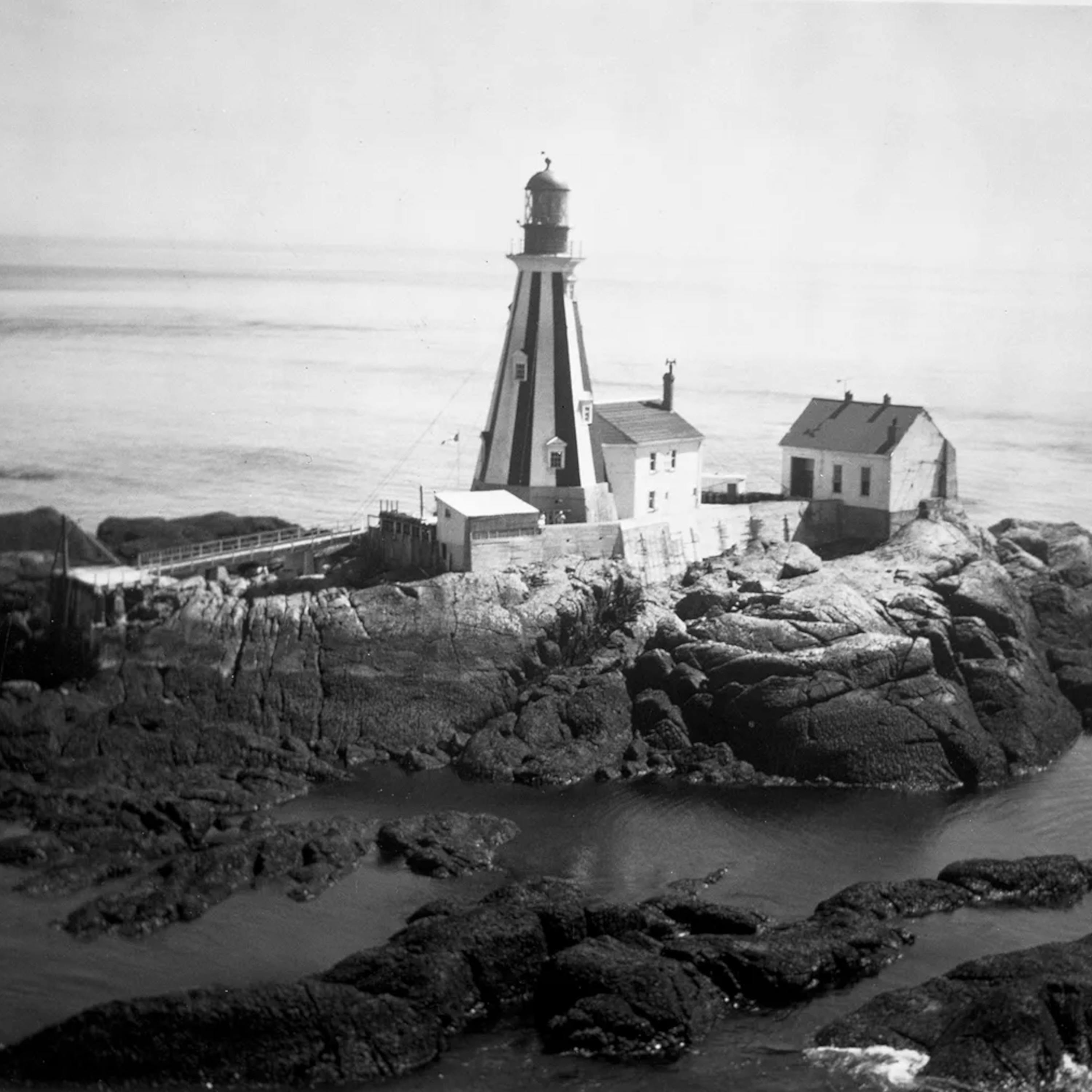
The wreck of SS Warwick in 1896 provided a night to remember for the residents of Grand Manan, New Brunswick.






On the evening of 30 December, 1896, the SS Warwick of the Donaldson Line crashed into the rocks at Grand Manan Island, New Brunswick, Canada. All 31 on board escaped safely, and there with no injuries. But the curious locals of Grand Manan soon found the precious cargo in the hold of the Warwick, and had themselves a New Year's Eve celebration to remember.
Written, edited, and produced by Rich Napolitano. All episodes can be found at https://www.shipwrecksandseadogs.com.
Original theme music by Sean Sigfried.
Listen Ad-Free, get exclusive bonus episodes, and free Shipwrecks and Sea Dogs merchandise by subscribing at patreon.com/shipwreckspod. Three tiers available!
-OR-
Listen ad-free on Apple Podcasts! Just find Shipwrecks and Sea Dogs in Apple Podcasts, and click the banner to subscribe.
All episodes, notes, and merchandise can be found at shipwrecksandseadogs.com.
Learn more about your ad choices. Visit megaphone.fm/adchoices
Hello and welcome to this impromptu and largely unplanned bonus episode of Shipwrecks and Sea Dogs, tales of mishaps, misfortune, and misadventure. I’m your host, Rich Napolitano.
Last night I was perusing some maritime history, as I often do, and came across a curious, somewhat lighter story about a New Year’s shipwreck. I say lighter because this shipwreck story involves no deaths, or even injuries. At first I was just going to share it on social media, but then I thought, I can bang out a mini-episode for the New Year, why not?
This is the story of the SS Warwick, which met its fate on a frigid night in the icy water of the Bay of Fundy, and ended up providing quite a night for some lucky locals.
The Warwick was a three-masted steel-screw steamer built in 1882 at Wigham Richardson & Sons of Newcastle. She was 316 feet long, 41 feet in width, and just over 2500 gross tons. Originally built for the Great Western Steamship Company of London, the Warwick was transferred to the Donaldson Line of Glasgow, Scotland in 1889.
On December 15, 1896, the Warwick departed Glasgow with 600 tons of general cargo and 500 tons of coal, with Captain George Kemp in command. Later that day Kemp anchored the ship at Greenock at the mouth of the River Clyde to fill out her crew, before departing for St. John the following morning.
The Warwick experienced the usual icy conditions and occasional heavy gales that would be expected during a late December North Atlantic crossing, but captain Kemp, his three officers in crew, 31 in all, had everything under control. Throughout the journey, the officer’s calculations of their position matched the Captain’s, with very little discrepancy, and showing outstanding competence and confidence of their true location. All was seemingly well as the Warwick approached the Bay of Fundy, on the final leg to St. John.
On December 30th, the ship was about 8 miles south of Cape Sable on the southern coast of Nova Scotia at 1:00 PM. Kemp and adjusted the ship’s course to turn west, pass south of Seal Island, and round the island on its west side. The Seal Island Lighthouse was spotted at 3:20 PM by the Captain and his officers, and their course and location were once again confirmed.
Captain Kemp stayed on course to the west to steer well clear of Lurcher Shoals; dangerous, rocky shallows west of Seal Island. When approximately 5 miles west of the shoals, and during high tide to be safe, the Warwick was turned North-Northwest into the Bay of Fundy, and toward St. John. The weather was fine, visibility was good, and nothing at all was out of the ordinary. Still, the quartermasters, or helmsman, were reminded to steer carefully, and check their compasses frequently to make sure they are following the proper course that has been ordered. A lookout was also posted after nightfall for additional safety, and a sounding revealed they were in 75 fathoms of water, and had cleared the shoals. Finally at 8:00 pm, the ship was turned to the north in order to pass between Bryer Island, N.S. to the east, and Grand Manan Island, New Brunswick, to the west. Sighting of the Bryer Island Light would be an indicator of being on the proper course.
At 9:30 PM, Captain Kemp observed a light off the starboard bow through his marine glasses, and considering the distance they had traveled, and the direction of the light, determined it to be the Brier Island Light, 13 miles off.
17-year-old Peter McLean was posted as a lookout on the bow. He later recalled, “I spotted a fixed bright light ... on the portside bow about five minutes to 10 o’clock,” he later testified. “I reported a fixed bright light to the officer on the bridge. The second mate answered saying, ‘That’s alright, mate.’”
McLean was then relieved by 18-year-old John McEwen, who took his post at the bow as a lookout. McEwen, interestingly, was found below decks as a stowaway earlier in the voyage, and was put to work as part of the crew. He had no experience as a mariner, no knowledge of compasses, navigation, or anything relevant to a sailor. It was later said that he had, “an almost entire ignorance of seamanship.”
Captain Kemp, Second Mate Bernard Webb, and others on the deck all agreed; this was the Briar Island Light, and the ship’s position was charted. The Light was observed to be a fixed beacon light for positioning, meaning it did not rotate in a circular motion as a lighthouse light would. Keeping the light continually in sight, the bearing of the ship was kept steady in order to avoid the Northwest Ledges off Brier Island.
Between 10:15 pm and 10:30 pm, another light was spotted, but it was low and thought to be a light from a pilot boat. The light was coming from an area where pilot boats were common, and so Captain Kemp and others on the deck agreed, the light was coming from a boat.
At roughly 10:40 pm, the lookout, John McEwen spotted breakers off the port bow. Despite knowing nothing of the sea, even he knew the sight of breakers was very bad indeed. He shouted, “Breakers ahead!” several times, but received no response. He began to run for the bridge to warn the captain, when suddenly the ship struck rocks with a jolt. The ship was stuck fast on Yellow Murr ledges, off the southern shore of Grand Manan Island of New Brunswick. Attempts to move the ship off the rocks were unsuccessful. At 10:45, the First Engineer reported that water was flooding through the damaged hull into the coal bunkers.
The crew remained on the ship until the following morning of December 31st. With the ship sinking, and no rescue coming, the crew abandoned the Warwick at 11 am in a lifeboat. They rowed for Gannet Rock, but were later picked up by a schooner and taken to Seal Cove. All arrived safely, with no injuries.
Meanwhile, the wreck of the Warwick attracted the attention of locals. With the ship sinking quickly, a small fleet of boats and dinghies appeared at the site, and people began boarding the ship. Initially looking to help rescue survivors, what they found instead made for a memorable and joyful New Year’s Eve. As they searched and plundered the ship, including the captain’s cabin, they discovered a vast treasure of alcohol in the ship’s hold. Many cases of various liquors were found, as well as loose bottles scattered about the hold. With delight, the happy plunderers made a chain of people and boats to remove the precious cargo and deliver it all to shore. A good deal of it never made it to shore, as thirsty revelers opened bottle after bottle.
Grand Manan resident Lloyd Cheney later recalled, “The second deck was about two feet deep with loose bottles. Here and there was a cask of wine or whiskey ... a cask of Guinness stout was stood on end. A large mug from the cargo rolled past, making it possible for everybody to indulge!”
Most of the liquor was hauled to shore on the boats, where the locals had quite a celebration. Cheney described it as, “the greatest celebration the island has ever seen! There will never be another such New Year’s Day celebration if the world shall last for a million years!”
One boat captain tied several bottles of liquor behind the boat, and headed for Seal Cove. He hauled in a bottle every now and then when he wanted a sip.
What was a fortuitous celebration for locals, and a monumental New Year’s Eve party, the event resulted in political tension. Halifax, Nova Scotia and St. John, New Brunswick were competing to be the preferred winter port for eastern Canada. Each was staking its claim and promoting itself as the better option.
The Montreal Star criticized the people of Grand Manan, writing, “Plunderers are stealing whatever is loose about the Warwick. There is no liquor to be had on the grounds now.” The Halifax Herald also jumped at the opportunity, featuring the damning headline, “The Dangers of Reaching St. John.” The Halifax Chronicle boasted, “Halifax will yet get her due as the rightful Atlantic winter port of Canada.”
As the news spread and the political spat heated up between the two ports, an investigation into the loss of the Warwick took place. The investigation was held at the
Offices of the Chairman of the Board of Examiners of Masters and Mates, in the Custom House Building in St. John, led by Commissioner W.H. Smith.
From January 9th to January 14th, testimonies were taken from Captain George Kemp, officers and crew of the Warwick, and other relevant witnesses. The commission determined that the Gannett Rock Light, a rotating light, was not functioning properly and the crew of the Warwick mistook it for the Brier Island Light, a known fixed light.
The testimony from the Lighthouse Keeper at Gannet Rock, Mr. A.O. Kent was particularly crucial. He told the commission, “I took notice of the lantern glass that night, and it was iced on the east, and round to the north, and on the west and south-west side. As the ice melts the steam rises and covers the rest of the glass, and would very much have the tendency to obscure the light and make it look like a fixed light. The light would show merely a flicker when iced up, and I have seen it when it looked like a fixed light, and would not be surprised if a stranger entering the Bay of Fundy mistook it for a fixed light. I repeat what I said before in my evidence, that the light might be mistaken for a fixed light from any position. I have seen this myself, and fishermen have spoken to me about it.”
Former keeper of the Gannet Rock Light, and current keeper of the S.W. Head Light, W.P. McLaughlin also offered damning testimony, which confirmed the poor operational state of the Gannet Rock Light. He told the commission, “I think that any man, even the pilots,
might might mistake Gannet Rock Light for Brier island Light, on account of the frost which gathers on the windows of the lantern. With the short eclipse Gannet Rock now has, a stranger might take it for a fixed light, with ice or mist on the glass. Three ships had wrecked recently in the same way as the Warwick. I think there has been on an average a wreck there every year for 53 years.
The Gannet Rock Light was maintained by the Federal Government’s Department of Fisheries, which had neglected to make repairs, despite numerous requests. In fact, many more wrecks would end up on the rocks of Grand Manan before the lighthouse was improved in 1905.
Captain Kemp and his officers were exonerated of any wrongdoing, with Commissioner Smith writing, As there is no proof in evidence that the casualty was caused by any wrongful act or default of the master of the ship, or any of the certificated officers, and it has been shown that the said
Master was navigating his vessel with the utmost care, being at his post of duty on the bridge for a considerable time previous to and at the actual time of the disaster…the Court refrains from dealing with his certificate.”
It was an unfortunate accident resulting in the loss of the Warwick, and considerable stresses for its Captain and crew. But on the bright side, if you consider it as such, the people of Grand Manan ended up with an epic celebration of a lifetime, and perhaps a hangover or two.
That’s going to do it for The Boozy End of the Warwick, thank you so much for listening.
Shipwrecks and Sea Dogs is written and edited by me, Rich Napolitano. Original theme music is by Sean Sigfried, and you can find him at seansigfried.com.
Please remember to leave a rating and review of the podcast, as it would truly help me out. Happy New Year to you all!
Please join me again next time, but until then, don’t forget to wear your lifejackets!



