Japanese Hell Ships with Jenny Chan
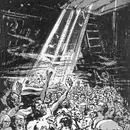
Japanese Hell Ships were notoriously brutal POW transport ships of World War 2.

 Apple Podcasts
 Spotify
 iHeartRadio
 PocketCasts
 Goodpods
 Amazon Music
 Castbox
 Pandora
 Podchaser
 Youtube Music
 Hell Ships is the name given to prisoner of war transport ships used by the Empire of Japan during World War 2. These ships were truly nightmarish. Thousands of POWs were crammed shoulder to shoulder in the holds of these ships, in brutal heat, unsanitary conditions, with rancid water, limited food, and no room to lie down. These ships were also unmarked, and were often targeted by Allied planes, ships, and submarines. Rich and guest Jenny Chan discuss Hell Ships and other atrocities during the war in the Pacific.
Rich is joined by Jenny Chan, who is the co-founder of Pacific Atrocities Education. Learn more at pacificatrocities.org.
This episode was written, edited, and produced by Rich Napolitano. Original theme music is by Sean Sigfried.
Please leave a rating and review on Apple Podcasts, Spotify, Podchaser, or wherever you listen to podcasts.
Shipwrecks and Sea Dogs merchandise is available at shop.shipwrecksandseadogs.com.
Shipwrecks and Sea Dogs is a maritime history podcast about shipwrecks, tragic loss, and incredible accomplishments on the world's oceans and waterways.
Follow Shipwrecks and Sea Dogs
- Subscribe on YouTube
- Follow on BlueSky
- Follow on Threads
- Follow on Instagram
- Follow on Facebook
Learn more about your ad choices. Visit megaphone.fm/adchoices
One day, we had to move to Manila, and we were put in Bilibid Prison, waiting for removal to Japan.
About nine o'clock in the morning, the sky was full of US Navy planes, flying in all directions, dropping bombs at the anti-aircraft guns in many parts of the city, including very close to our prison walls.
Japanese planes were falling all over the place, and anti-aircraft flak fell through the roof and over the prison grounds. The next day, these planes were back most of the day. A very nice sight to see, US Navy planes.
It was good to see the Japanese on the other end of the battle, although we weren't sure what was going to happen to us. But our hopes were high, and it was a wonderful feeling. On October 11, 1944, it was time to move out.
We lined up and walked through Manila to the port area, and loaded on a troop ship. There were about 1800 of us, and they crowded 1200 into one hold, and 600 in the forward hold, a coal bin.
Manila Bay was a mess, with sunken ships all over the bay, evidently from the bombings we had seen earlier. The ship was at the top of all the dirty things the Japanese dished out.
For the past two and one half years, I thought I had seen about everything. But this was the worst. Men were so close together, there was no room to lie down to sleep.
Daytime heat was terrible. The stench so bad, it was almost impossible to breathe. We received one canteen of dirty water, nearly every day, and a mess kit of rice.
Men who died were not taken out for days. Everyone was dehydrated. Five-gallon buckets were used as toilets, passed down on long ropes, and many times these would run over and spill as they were being pulled up.
October 24th, late in the afternoon, a torpedo hit our ship mid-center. The rear half of the ship fell into the water, with the deck underwater. The Japanese left the boat for us and took off in lifeboats.
Most of them, I imagine, were picked up by passing Japanese ships. Any Americans that approached those boats were beat off with long poles.
When I got up on the deck, I walked down near the rear deck and into the water, grabbed some boards and floated away. Many men were still on the deck of the boat the last time I saw it at dusk.
I floated for several hours when a lifeboat drifted right into me. I crawled aboard. Robert Overbeck of Baltimore was already in the boat wrapped in a canvas, which was actually the sail for the boat.
This sail had come floating along in a box, and Overbeck had upped it aboard, ropes and all. I wrapped myself in it too, and we floated along for some time before we heard someone yelling.
We called back and forth and finally located Anton Cici and pulled him aboard. When daylight came, we also found Calvin Grafe and Don Myers and took them aboard. Then we began to look alive.
We had the sail, ropes, and the mast was tied in the boat. There was a gallon size bucket in the boat, and we began bailing out the water, which was a real job as the boat was nearly full of water.
There was a sealed container of hardtack and part of a keg of water aboard.
After we got all the water out and got acquainted a bit, as we were trying to decide where we should head, we saw a Japanese destroyer coming, so we just laid quietly in the boat, and although they came within 100 yards of us, they made no attempt to
help us. We watched it move out of sight before we began to put our boat in order for sailing. We raised the mast, repaired the rudder, and began to sail on a northwest course. We sailed the rest of that day, all night and the next day.
Late in the afternoon of the second day, we came upon two Chinese fishing boats. After some discussion, we decided to take a chance on getting help from them, so we pulled up alongside. They helped us aboard their boat and were very friendly.
They gave us food and water and dry clothes. Later in the evening, they fed us again, and then put us to bed for the night. That was the best night's sleep I had in three years.
The next morning, October 27th, they took us to shore to a small village and turned us over to the American people in the area. That is when it finally dawned on us that we had escaped from the Japanese and their tortures and that Hell Ship.
This was an excerpt from the memoirs of Sergeant Avery Wilbur of the United States Army. He was serving in the Philippines on December 7th, 1941, when the Japanese launched their surprise attack on Pearl Harbor.
He and thousands of others were captured as prisoners of war in April and May of 1942, as the Japanese Imperial Army took control of the Philippines.
Wilbur spent over two years in Japanese prison camps where prisoners endured nightmarish conditions, brutal treatment, starvation, dehydration and disease, all while being forced to work.
In 1944, Wilbur was placed on board the transport ship Arsanmaru and survived yet another torturous experience. Hell Ships and Pacific Atrocities, today on Shipwrecks and Sea Dogs.
Hello, and welcome to Shipwrecks and Sea Dogs, Tales of Mishaps, Misfortune, and Misadventure.
5:54
Introduction
I'm your host, Rich Napolitano. Today, I have a special guest to discuss a dark and tragic time in our history. Jenny Chan is the co-founder of Pacific Atrocities Education, which you can find at pacificatrocities.org.
Its mission is to increase awareness of the atrocities that occurred in the Asia Pacific Theater of World War II. Jenny, thank you so much for joining me.
Yeah, thanks. Thank you so much for having me today as a guest.
When I browsed your website, I couldn't help but be impressed because there is an absolutely incredible amount of information and resources that you have put together, you and your team.
How have you been able to curate and create such an incredible amount of information?
That's a good question. I spent the last 10 years really doing oral interviews and also scanning primary source documents at the National Archives. And I think we've scanned like a million pages at this point.
And this information is not so neatly stacked and organized. So when we're like looking for it, for example, occupation of Hong Kong, often of time we stumble across other things that are somewhat interesting, and then we put it on the side.
And so what you see on a website is, you know, this like tip of the iceberg is not quite at all what we have total on, in terms of our database, but we try to release new content at least, you know, once a week for our blog posts and also for our
Well, there are a lot of things like scanned letters, and there were so much, everything from government letters of officials, diaries, just all kinds of things that were really amazing to browse through and read what was being said at the time.
Yeah, we found a lot of death certificates, which we have also done research on, for example, the Oklahoma trial, which were actually declassified way after some of these death certificates were published by like 1947.
And when we found out that there were actually medical atrocities that were involved in terms of these people who were fighting in the war. So for example, they were used for medical experimentation instead of whatever their certificates said.
We tried to release that information and curate it onto our blog post as soon as possible instead of just keeping it to ourselves because some families might be wondering after all these years what happened to their family member.
And someone actually did reach out saying that they were like the grand nephew of this guy who was actually involved in the Oklahoma Trial. And we wrote a blog post about him.
And then they reached out and saying that a third of his grandpa's family was missing because of this World War II experience. And yet we don't really research and talk too much about it.
In terms of death toll, 30 million is like the lower estimate of death toll that happened in Asia. And 42 million is like the high count.
And we really never know how many people actually died during this period because there were some villages that were just destroyed and then they would just put mass graves there and then they didn't really do the count.
And also between surrendering and occupation of Japan, there were two weeks of period where they can really just burn all the evidence that they wanted to burn and destroy. And so that's why it's hard to get the exact number of death toll.
And of course, what we're talking about is primarily, I would say, the atrocities committed by the Japanese Imperial Army and Navy during World War II specifically is the time we're looking at.
Now, when we think of World War II in the West, we always think 1939, the invasion of Poland and then all of Europe goes haywire.
9:48
Asia Pacific History
But it was far earlier than that in Asia. What was happening, I believe it was around 1931, I think, when the Japanese invaded? What was going on at that time?
Yeah, that's 10 years before Pearl Harbor.
And Japanese invaded Manchuria, which is a part of China and called it Manchukuo. And they had slave laborers and they were building a human experimentation lab as well. But they also had these slave laborers to build industries in Manchuria.
For example, they had coal mining, they had industries and factories. Because their whole propaganda at the time was that Japan was growing, the Japanese people were growing as a population and they needed space to grow.
And so Manchuria would have provided the perfect time for that and the perfect place for it. And the League of Nations, of course, was not recognizing that. And in 1933, Japan decided to just walk out of the League of Nations.
And I think that's what inspired Mussolini and also Hitler as well, to walk away from League of Nations and kind of just kind of use international law as kind of like a joke at that point to them, because Japan had done it in 1933.
So then later down the line in 1939, you see the same kind of thing in Europe.
Yeah. In fact, Hitler and the Nazis called it Lebensraum, living space. That's why they were pushing into Poland and expanding into Austria and the Checklist of Achaia.
So same concept, just took the cue from Japan.
And it's also interesting, recently, I started reading more about Matsuyo Kojusuke and he had his early, he went to college in Oregon, then went to the West to kind of study how the West were getting things done.
And Oregon in 1910 was like a wild, wild West. And that's how they kind of study the wild, wild West and got inspired for Manchuria, to occupy Manchuria. And I thought that was interesting, how there was like a parallel there.
Now, you have a personal connection that inspired you to start this project, is that correct?
Yeah, my grandma, I had no idea what she was talking about when she was telling me to stop watching anime.
She was telling me that would like contribute to my brain broad and whatnot. And these Japanese people will brainwash you, and they're not very great people.
And I thought she was just senile because it really fall into the narrative I had in my mind about World War II. So after she passed away, we found this whole box of military yen and rice rationing coupon that she had from the wartime.
And of course, military yen was kind of garbage. And by the end of the war, like toilet paper was worth more than that.
And then when she passed away too, I also got into a rabbit hole into like trying to see what her experience was like, you know, after I saw military yen. And to me, that was physical evidence about what she was talking about.
And so I went into a rabbit hole into looking for like experience in Hong Kong or in China about World War II. And I was reading Rape of Nanking and The Rising Sun.
And I was thinking to myself, if there are so many Holocaust centers out there, then why is there no center about what had happened in Asia? Surely 30 million people, even the lower estimate is a lot of people who perished.
And so I was looking for a job in that kind of area, and I couldn't find one, so here I am.
Well, you made it yourself, and I'm sure it was a lot of work, especially at first to get started. What kind of challenges did you face at first when you began this?
A lot of challenges actually, like funding, for example, no one knew what I was talking about, or people were like, oh, you know, that's dismissing the Holocaust.
14:14
Research Challenges
And I'm like, I'm not really trying to dismiss the Holocaust. I'm not even comparing. I'm just saying that this also happened.
And finding material to talk about was kind of difficult because I didn't know where to get started. And then I realized that National Archives was probably a good idea because Japan was occupied by the United States.
Also, the death factory, I think the guy's name was Sheldon Harris. He, I found a bunch of letters that he was writing to Dianne Feinstein in declassification of Unit 731, which was related to human experimentation.
And so then I went down that rabbit hole and tried to find where if it was declassified, where that would be located and whatnot. And so yeah, just trying to find where to go next.
And then I was also interviewing these comfort women in China about what had happened to them. And this was in 2015, thankfully, before they all passed away recently. And then we also found this Filipino-American community in the Central Coast.
And we started also interviewing them about their war experience in Asia. And it was very fascinating because I, in high school and in college, I've only learned about Pearl Harbor, and then that was it.
And I didn't realize that for two years almost, America was really losing the war. And there was the fall of Philippines, and then the Filipinas were picking up arms to fight, and they had almost no resources.
And it was really bad too, because following that US and Filipino forces at Baton and Corregidor, then they had the Baton Death March. Like a lot of American POWs went through that.
And I was learning from the Filipino American community how they were also trying to assist them during this Baton Death March, because there was a lack of food. And Filipinos, they're very nice people, I would say.
And they were trying to share some food for these prisoners of war who were captured by Japan. And some of them got actually executed for doing that, for trying to help.
And later, they had a Hell Ship, which shipped people from Baton Death March to everywhere else to do slave labor in 1942. And in America, how I learned this history was that we learned about Pearl Harbor, we learned that America won the war.
We don't really know, like we know about Iwo Jima. And then we see the atomic bomb.
Yeah, there was a lot in between those, a lot of very difficult fighting, long drawn out, especially in the Pacific. Obviously, your organization is focused on educating and raising awareness of what happened.
Why do you think the memory of those events has faded, or perhaps they weren't ever really properly told to begin with?
Yeah, so geopolitical reason, I think right after World War II, we had Cold War and, you know, America needed Japan to fight China and fight Communism.
And also, we were doing a research about Arisan Maru, which was a Hell Ship, and it was sunk by friendly fire because Japanese never really properly marked their ship, even though that they were supposed to carry POWs.
And there were only eight people who survived the ship of 1,790 people. Which, you know, if you think about it, of a ship, I mean, you would know, you do Shipwreck podcast with a ship close to 1,800. How many survivors do you expect it to be?
For a ship like that, if it's sunk by an explosion or something, it depends on whether they can get the lifeboats launched.
But I would guess at least half or more, typically.
Yeah, but only nine people survive because they were below the deck. So a lot of people were starving on this boat. They were just, they just survived Baton Death March, and they were in really bad shape.
And also when they were struck by a friendly fire, I think it was from USS Shark, the Japanese made sure that they die. They had some, you know, suicide people who stayed behind to make sure to shoot everyone. So then their survival was less.
And then the survivors, some of the survivors were like, yeah, we found this lifeboat eventually. And then when we saw the Japanese coming, we just pretended that we were dying on the lifeboat, that we were dead. So they were plain dead.
And then eventually they were rescued. After all that, because there were only eight or nine survivors of this one boat, it doesn't feel like it's big enough. It wasn't enough witnesses that survive to go through the trial.
Does that make sense? Isn't that crazy? Like, I know it sounds illogical.
It's 1,700 people, close to 1,800 people died. But because there weren't enough witnesses that saw that happening, then they can't really do a fair trial on that.
Yeah. You know, regarding the Hell Ships, what struck me as really tragic is a lot of the prisoners that wound up on these ships.
20:03
Prisoner Treatment
And just to back up a little bit, when the term Hell Ships started back during the American Revolution on the British warships, the Americans called them Hell Ships because of the just awful conditions.
That term was reignited and used again during World War II, but even to a more nightmarish factor.
But what struck me was that these prisoners that were put on these ships, most of them, they were already in prison camps in the Philippines or possibly one of the other islands. They had gone through starvation and disease and beatings and torture.
Then they're put on these ships to be transported to Japan as the Allies were retaking the Philippines. So what were the conditions like on these ships? How would you describe them as far as what those people experienced?
Yeah, they were shoulder to shoulder and they were already starving.
I think one of the survivors said that when he started the war, he was like 130 pounds. Then by the time he survived all these events and went to the air base in Kuomint, he was like 90 pounds. So that's just how much weight they were losing.
And then also they didn't have clean water. So a lot of people were falling from like Berry Berry this century.
And these ships were never marked because they didn't want to mark them, even though that Red Cross told them, hey, you need to clearly mark your ships. But they never marked the ships. And so then a bunch of them got struck by a friendly fire.
I think there were 150 ships that were used for Hell Ship purpose. And I think 20 of them were big enough to be carrying like thousands and thousands of prisoners. And I think Lisbon Maru was also shot down.
Juno Maru were also disasters. And Tango Maru was also a disaster. And I think Juno and Tango each carry 3,500 prisoners.
And the survivors are very minimal in comparison to how many prisoners there were. And like I was saying earlier, in 1942, America was really losing the war.
And so there were thousands of POWs just being shipped from the Philippines or from the Battle of Hong Kong to go somewhere in the Japanese empire to start.
For example, those who made it actually to one of the places in the Japanese empire, Manchukuo, Manchuria, wartime Manchuria, they made it to this prisoner of war camp. So kind of like a concentration camp.
And they were producing Mitsubishi Zero airplane. And it's funny because like some of the affidavits afterward, they were like, oh, we're trying to sabotage this plane making experience because we don't know.
We know that these planes are going to be killing our compatriots. But at the same time, they get found out that they were trying to sabotage and then they get punished.
And it's interesting too, because they were then saying that after the war, they were told to not really talk about it because it's cold war and political interest was different than during World War II. Now, Japan is our friend.
Yeah, it's funny how those things happen. We funded the Chinese government against the Communist Revolution, which failed. And then Japan invades China and then we fight Japan and then we supported Japan and enabled their reconstruction.
I'm not saying we shouldn't have done that. But nothing really changes with warfare over time, over the centuries and millennia. That enemies and friends come and go, and who was once your enemy is then your friend.
Yeah, there's no forever friend in international politics, unfortunately, I have to say.
And it's also interesting because the guy who came up with the economic policy in Manchuria was also, his name was Kishinobusuke, and eventually he was in Sugamo Prison, allegedly as class A war criminal, and Eisenhower basically bailed him out.
And said that because we need him to kind of navigate the Japanese political scene. And so he went from like allegedly a war criminal to the prime minister within a decade.
Yeah, well, they needed Japan to be strong to oppose Communist China. So that's just how it goes. There's always political intrigue.
It's not so much different than today, I guess, you know. You know, you were talking about the different Hell Ships that were sunk.
In preparation for this interview, I was doing some homework and I was reading about the Orioko Maru that was transferring prisoners from the Philippines to Japan. And it was attacked by Allied planes. There was dive bombers.
And the account that I was reading was talking, you know, they could hear the planes coming. They could hear them diving. They could hear the torpedoes splashing and gunfire raking the deck.
And the hull was being pierced and people were getting shot. And it was dark and they were in the hull of the ship in the dark, basically shoulder to shoulder, like you said, with one five-gallon bucket for their business.
And they eventually, the Japanese crew leaves the ship, abandoned ship, and it's beached up on an island off the Bataan Peninsula. And one Japanese man comes running down and says, everybody out. But a lot of those prisoners had died of wounds.
They were being blasted by shrapnel, etc. And the ones that did make it, they get out and they put them on the shoreline there and waited all night, over a day in the cold.
And then they would march to another prison camp, or they were put on another ship to go to another prison camp. So all of that, they came from a prison camp, endured all of that.
Exactly.
The ship got blasted out of the water by friendly fire. Those that did survive have to go to another prison camp. Just to call them Hell Ships is very apt.
Yeah, just like, it's so dark.
And for me, I don't, I mean, I read it, I understand what they're talking about, that you go from one camp to another camp. But I don't understand why transport like that. Was that the most efficient way to go around, to go about doing that?
Or what do you think?
I would say it absolutely was the most efficient way to transport them.
Now, the bottom line is, I've heard many interviews of World War II veterans and other military personnel say, it's just because that the philosophy, the cultural differences, the Japanese army didn't care.
I've heard it described as they were just pieces of meat, to put it, to slave labor. If they died, they'd die, they didn't really care.
They just wanted, they wanted whoever was able-bodied to go work in the camps and produce whatever, grow food or build planes or whatever it is they might need. So they really didn't care that much if they lived or died.
And also, you know, famously, they found it very shameful to be captured.
Right.
That's why they didn't surrender, very rarely surrendered themselves. So there's a lot of cultural things too.
I think from reading what I've been reading, traditional Bushido and samurai culture, they were like, they wouldn't kill themselves if they were going to go to a battle, they would kill their enemies.
But then it got so kind of corrupt in a way because then it became like, oh, we need to serve the emperor and it's a shame to be captured. And so then it kind of corrupted this Bushido culture.
And then they will call it like, if you are surrendering to your enemy, then it's a shameful kind of way. And so then they saw the POWs as like lesser than because they were surrendering and they wouldn't have done that.
And so because they would have killed themselves before surrendering. And so then that's why they didn't feel like they need to treat them as human, because then in their minds, they're now already less than human.
And also what I found really interesting with these Hell Ships that were struck by friendly fire, is that the Japanese really make sure to like lock the deck to minimize the survivors, so then they cannot get out.
Like the Lisbon Maru, they were trying to, a few Japanese stayed back to really lock the deck to make sure that there was no survivor from the ship. And those that survive were really, I mean, you have to have grit to survive this kind of situation.
That's an understatement, but yes, I agree.
You're in the middle of nowhere in South China Sea, right? Between like, probably they have never even been there, between Philippines and Taiwan, and just trying to survive, it's survival is really, really nasty.
And a lot of the veterans that I've been reading about, they get PTSD, and they didn't even know what PTSD was in the 1940s. In the late 1940s, they were like, oh, you just need to get over it. And so it's so under-talked about.
Also, that kind of psychological way of not just losing a war, losing a battle, then you get captured, and then you go through this crazy Baton death march, 65 miles, almost no food.
And then you get captured onto a boat, you get struck by friendly fire. It's like a five-part tragedy, if you think about it. It's a lot.
And then you have to go to a camp. So that's like six-part, seven-part tragedy.
Plus, there's so many other things we haven't talked about, or maybe just mentioned briefly, the rape of Nanking, all of the experiments that were done by U-731, just all of the horrible atrocities that had occurred throughout China and Southeast
Asia. The Hell Ships were just one piece of that. The Comfort Women, all of these things from your website that I couldn't possibly list them all. There are so many aspects to this.
And part of me wonders that following the war, we were trying to reconstruct Japan as we were talking about. Japan was occupied, but we did rebuild a lot of the country.
I think just a theory of mine that that's probably why a lot of this wasn't brought up, because in the Western America specifically, maybe we didn't want to demonize the Japanese, even though what they did at the time was terrible.
But the Nazis certainly were demonized far worse.
Right. But it's also different too, because US also helped in reconstructing Germany. But then if you think about it too, if you talk to a German about George Holocaust, they're not going to deny it.
But it's very often that a Japanese could deny of the atrocities that happened in World War II, because Eisenhower had a hand to play for the war criminal to become prime minister. Right?
And it's also interesting that they had then enshrined Yasukuni Shrine and enshrined some of their war criminals, Class A war criminals.
And Koreans who have been captured since like 1910, colonized since 1910, they were suffering through decades of Japanese brutality. And they have weekly protests in front of their Japanese consulate in Korea. And in South Korea.
And so the historical memory between these countries is there. And so I think it also plays into geopolitical situation as well.
And so I think that's why we need to study history to actually learn about what happens, not just during the war, but also afterward and how each country sees each other today.
That's very well said.
33:10
Importance of Education
Those thoughts were going through my mind, preparing for this interview. Just at war in general, thoughts about these atrocities. And it just brought to mind all of the things I've read.
I've read so many even going back to ancient history. Human behavior has been pretty awful throughout the ages.
How we treat each other and kingdoms and empires and countries and over things that really after when you think about it after the fact should never have happened, but they did. It's not at least not for me.
It's not so much blaming still to this day holding a grudge, I should say against Japan or Germany or vice versa. A lot of countries hold grudge against the United States for a lot of reasons.
But despite all those things actually happening, I think it's just human behavior has been so unpredictable, but also predictable. We have predictably treated each other poorly throughout the ages and continue to do so.
So educating like your organization does is so important because as we forget or never even learned that these things happen, people like you can remind us and show this should never have happened and it should never happen again.
So I think your work is very important.
Yeah, thank you so much. Yeah, and it's not to hold grudges, but I think we need to educate ourselves on what had happened in history. And it's interesting because most Americans don't know why some parts of the world hate them.
And I met a Serbian girl while I was traveling, and she was telling me that she's my age and she was telling me that a lot of her childhood was spent underground because it was because of the attacks.
And I felt really bad because I'm like, wow, we're the same age. And your life experience and my life experience are very different just because of geopolitical and where she was at the time.
Yeah, and I think you're right. There's something that could be said for pretty much every nation on the planet as far as things they've done wrong or atrocities they've committed or questionable ethics.
The colonial period was certainly terrible for a lot of reasons. But like I said, learning from that, seeing and understanding how terrible those things were is what's so important. And hopefully we can learn someday.
Doesn't appear to be happening at the moment.
Let's hope. Let's hope this is actually going to be over in two weeks.
Do you have anything else that you would like to talk about that I haven't mentioned yet?
People can go on their website, pacificatrocities.org. And yeah, thank you so much for having me.
Oh, it's my pleasure. Believe me. It's really great to talk to you and learn more about what you do and what your organization does.
And I really want to encourage everyone to visit pacificatrocities.org and read through the articles. You know, just pick some that are appealing to you. There are videos, there are short videos.
I read several of them myself and I've watched a few of the videos. And I thought I knew a lot about the Pacific Theater of World War II. But after watching and reading, I know now that there's a lot more that I need to know.
These are lesser known topics that a lot of people aren't aware of, and I think it would be very educational. But also, if anybody would like to support your organization, maybe volunteer or donate, how can they do that?
There's a donation button on our website, and just reach out. There's a Contact Us form. We're always looking for someone to help us with metadata on our archive so we can have better searches.
And we also have a new book coming out called The Sinking of the Aruzan Maru, and it has a lot of details about one of the Hell Ships that was sunk by a friendly fire.
Well, it's right up my alley. I'm going to make sure I get that one.
Thank you.
Well, Jenny, thank you so much. It was a pleasure to talk to you. Shipwrecks and Sea Dogs is written, edited, and produced by me, Rich Napolitano.
Original theme music is by Sean Siegfried. Please be sure to rate and review Shipwrecks and Sea Dogs on Spotify, Apple Podcasts, or wherever you listen to podcasts. Please join me again next time.
And as always, don't forget to wear your life jackets.


